Business Segments
The depth to deliver major projects sits across Vulcans integrated operations
Vulcans integrated business
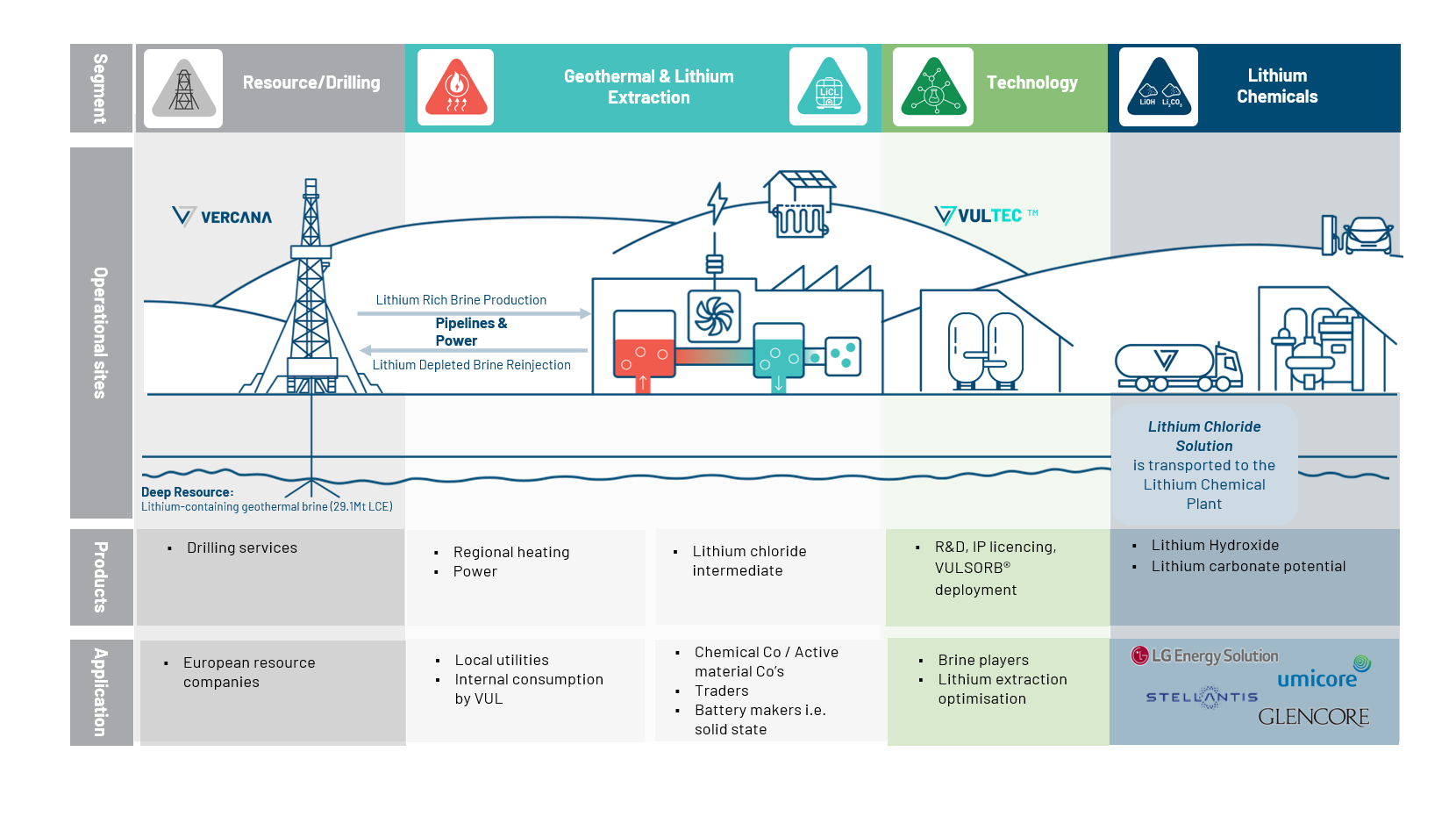
From the upstream resource to downstream finished materials, Vulcan’s integrated approach will deliver a basket of products for the European battery supply chain.
Our lithium applications include electric vehicles as well as battery energy storage systems for renewable energy and uninterrupted power supply for data centres and artificial intelligence.


Resource & Drilling
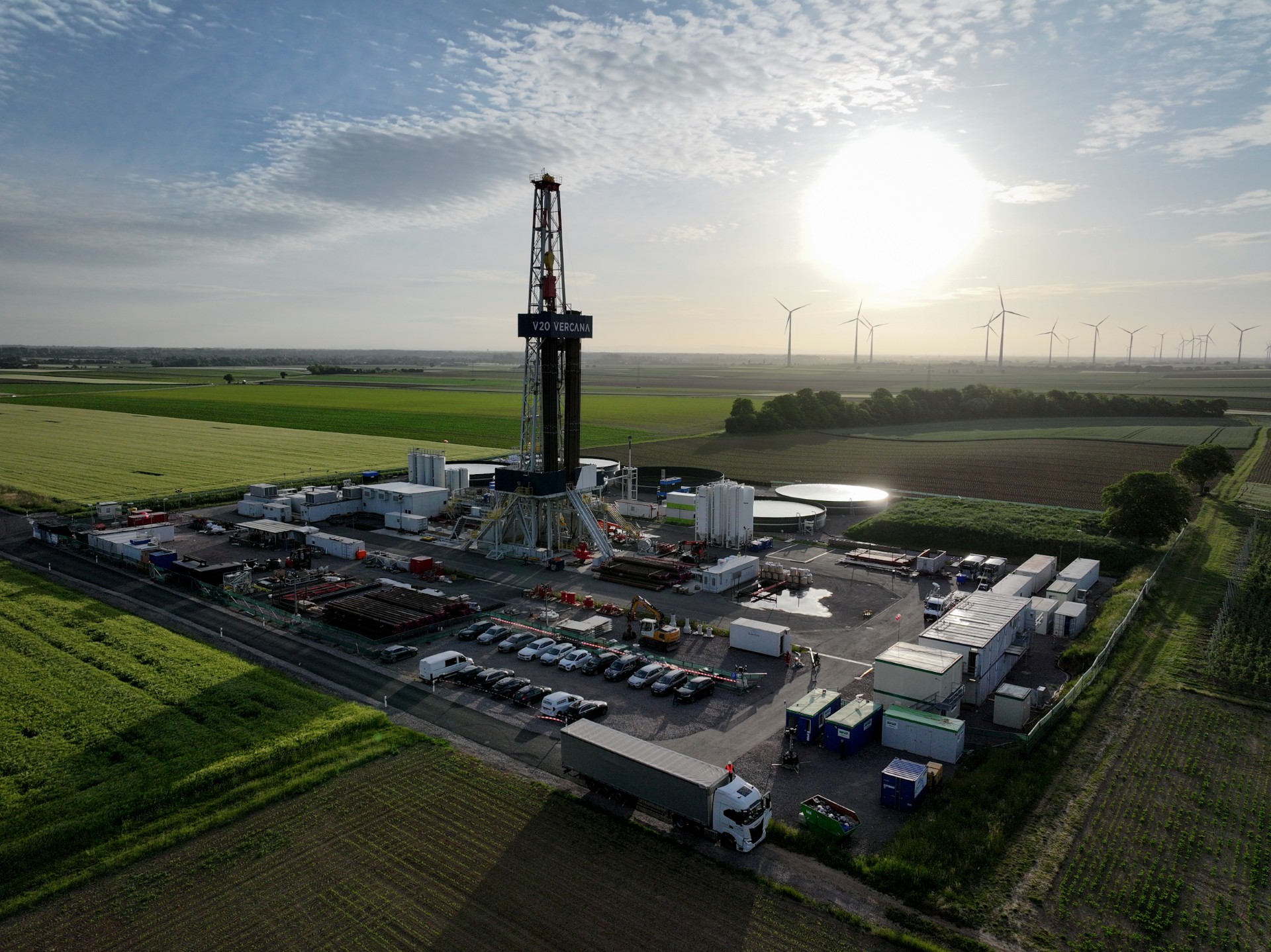
Vulcan has a tier one asset with globally significant resource scale and enviable impurity profile. The resource is delivered to the surface hot which reduces the need for gas to run lithium extraction processes and generates a co-product. To access the resource, Vulcan has its own in-house geothermal drilling company, VERCANA.
Upper Rhine Valley Brine Field (URVBF) Lithium Resource
- Europe’s largest lithium resource based on publicly available, JORC‑compliant data.
- Recognised as a global tier‑one lithium resource.
- Contains 29.1 million tonnes of Lithium Carbonate Equivalent (LCE) in total.
- 4.16 Mt LCE within the Lionheart development area.
Vulcan’s Licence Position
- Vulcan holds a large license portfolio covering >2000km² of area.
Geological Setting & Existing Operations
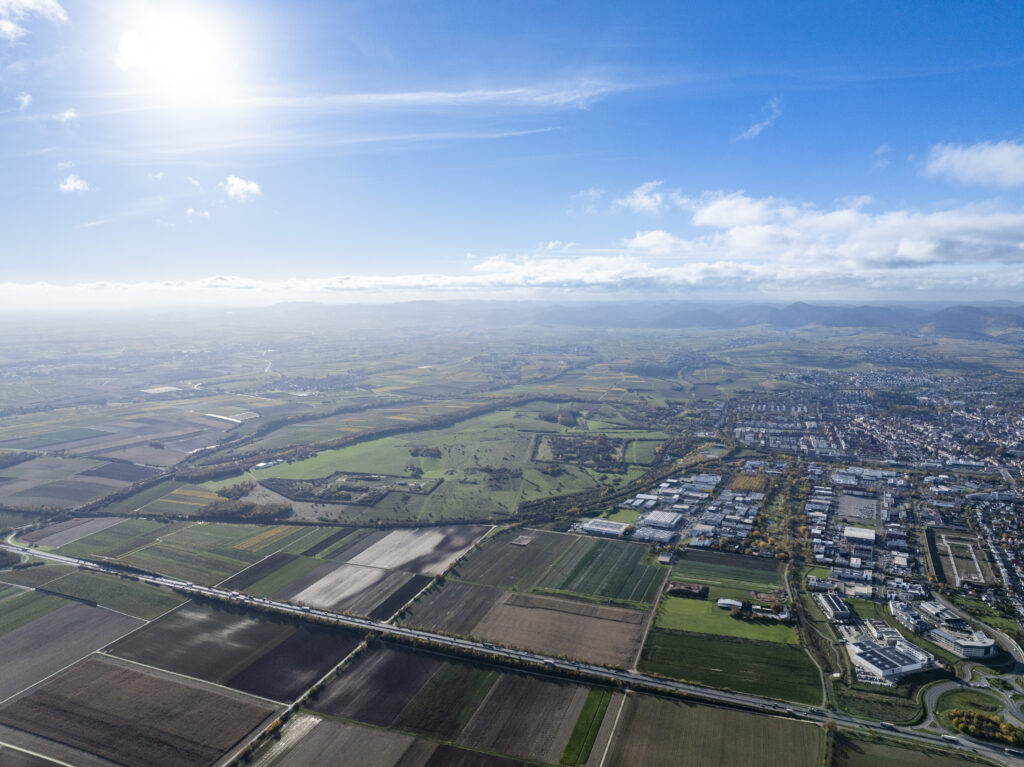
- Located in the Upper Rhine Valley: a 300 km long graben system with consistent geothermal‑lithium reservoirs hosted in sedimentary rock.
- The URVBF is a mature, well‑known, and producing geothermal field, home to multiple chemical parks and over 1,000 existing wells.
- Within Vulcan’s Lionheart project area, four deep geothermal wells have been operating for more than 10 years, demonstrating reservoir stability and long‑term performance.
- Drilling operations with a highly experienced, global well construction and operations team
- Trained and experienced rig crews taken over from previous Rig operator
- Strong QHSE culture, preventative maintenance system
- Performance driven – operational excellence
- Rig setup fully aligned towards Vulcan’s Field Development Plan
- Independency of rig market situation – rig lines established
- Best practices and Lessons Learned System
Technical excellence:
- Vulcan has a highly experienced, global well construction and operations team with worldwide experience in oil & gas, geothermal and related industries.
- Increasing upstream brine production:
- 1,000 existing wells, mature, producing field in the Upper Rhine Valley Brine Field.
- In our Lionheart Project area, four deep geothermal wells have been in operation for more than 10 years.
Conservative Approach
- Targeting brine production from sandstone only, where seismicity risks are very low, in line with industry best-practice.
- Using conservative flow rates estimates, with an average flow rate (85l/s), below demonstrated well performance in the area (>100l/s), leaving room for upside.
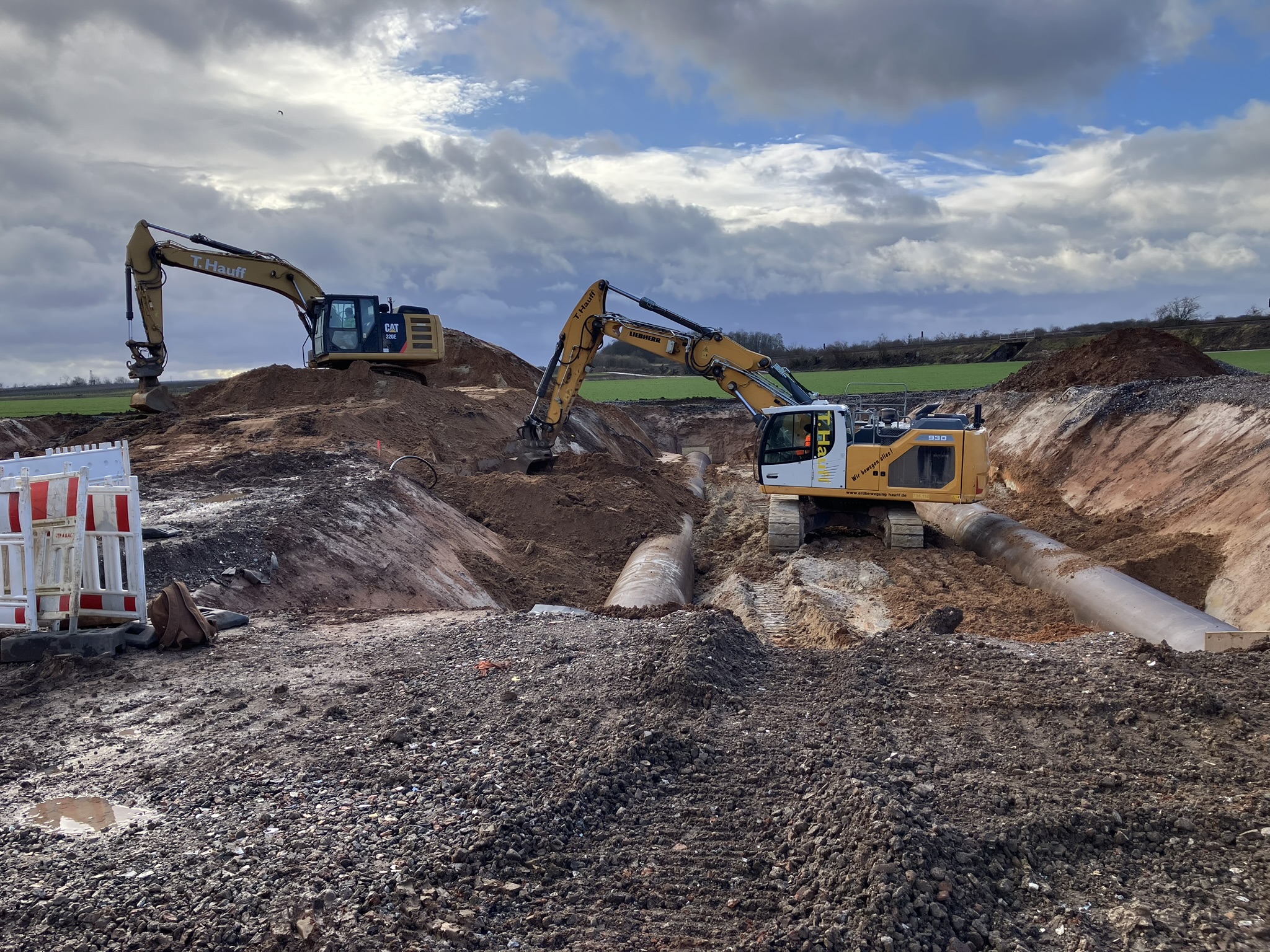
- Brownfield development: Vulcan is increasing the number of its existing production well sites from two to seven during Phase One project build.
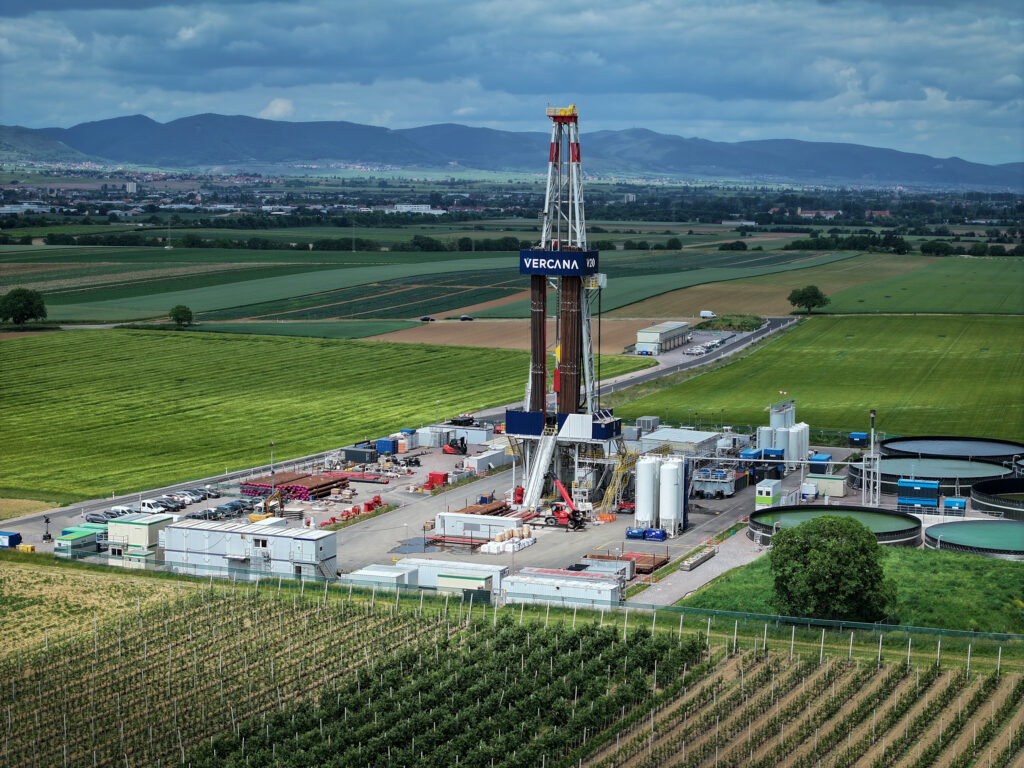
- Highly experienced well construction and engineering team
- Full-scale well delivery process capability, well established supply chain processes and fully aligned towards Vulcan’s Field Development Plan (FDP)
- Experience in planning and executing onshore and offshore operations, HPHT environment, testing, completion, interventions drilling, and German regulatory requirements with a strong QHSE culture
- Data driven decision making using state of the art software solutions and expert knowledge
- Established network in drilling and wells community – review process with external experts
- Engineering based on extensive Offset Study, “Do-it-right-first-time approach”
Over 10 years’ experience
In our Lionheart Project area, four deep geothermal wells have been in operation for more than 10 years.
Geothermal and Lithium Extraction
Lionheart represents the blueprint for Vulcan’s growth phases with future phases to be built out in a modular manner, becoming more cost-effective and efficient each time.
Geothermal and lithium extraction facilities are planned to be co-located in proximity to well sites for efficiency.
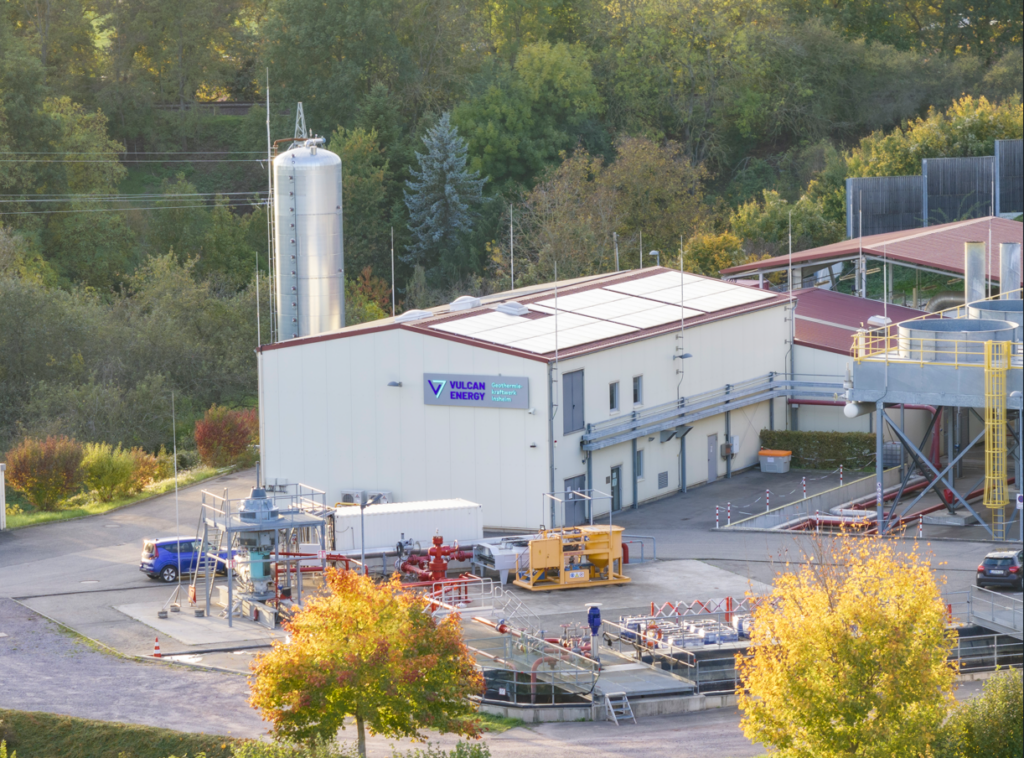
- The Lionheart value chain includes the Geothermal–Lithium Extraction Plant (G‑LEP) co‑located with geothermal facilities.
- Construction has commenced in Landau, serving as a scalable blueprint for future growth projects.
- Vulcan already owns and operates two geothermal power plants located in:
- Insheim
- Landau
- These plants include associated geothermal wells and both geothermal and lithium licences.
- The existing plants have supplied geothermal brine to Vulcan’s pilot plants and optimisation facilities.
- They will soon direct brine to the commercial Lionheart G‑LEP facility, supporting Phase One production.
NatürLich Insheim
- Vulcan’s NatürLich Insheim geothermal power plant is operated by Natürlich Insheim GmbH.
- The plant has been part of the Vulcan Group since 1 January 2022.
Performance & Impact
- Produces carbon‑neutral electricity for approximately 6,500 households.
- Since 2012, it has generated around 234,000 MWh of renewable electricity.
- This production corresponds to an estimated 87,000 tonnes of CO₂ emissions avoided.
Lithium Extraction – Lionheart Blueprint
- The Lionheart project serves as the blueprint for lithium extraction across future phases of Vulcan’s development.
- Vulcan’s business segments can be leveraged flexibly, in whole or in part, depending on customer and partner requirements.
- Geothermal and lithium extraction facilities are planned to be co‑located near well sites to maximise efficiency and reduce operational complexity.
Lithium Extraction Process & Product Pathway
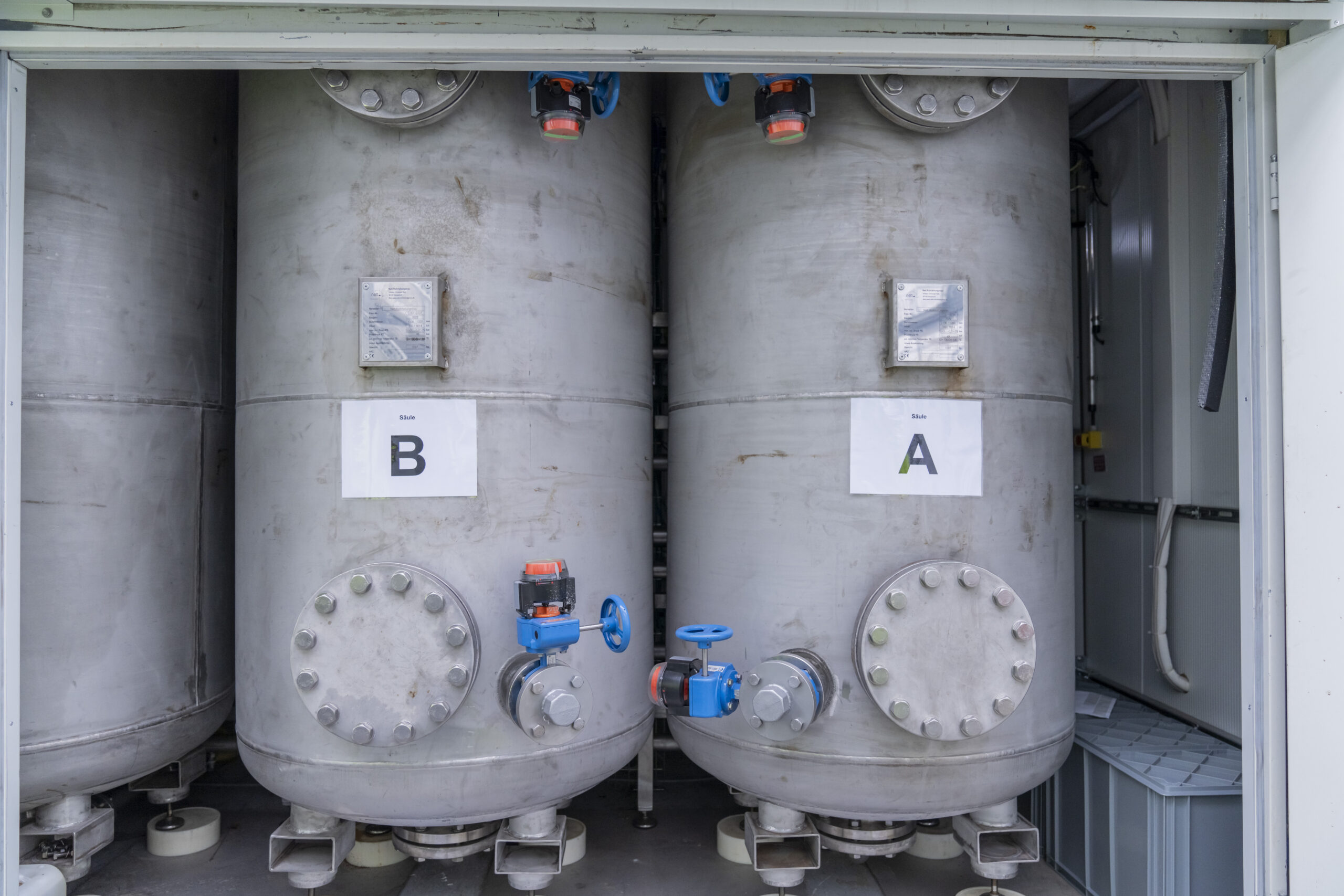
- At each Lithium Extraction Plant (LEP) within a G‑LEP facility, lithium chloride (LiCl) is produced from geothermal brine.
- LiCl will initially be transported to the Central Lithium Plant (CLP), where it will be converted into lithium chemicals for customers.
- Future customers may opt to receive LiCl as an intermediate product, which could streamline project steps and reduce the need for some downstream plant and equipment.
Technology
Vulcan’s technology operations have been responsible for the design and development of what is a now a bankable process that has launched the business into construction phase. As Vulcan has de-risked its business model, the focus on technology has swung from pure R&D and plant demonstration to ongoing optimisation for Lionheart and future growth. The opportunity exists to also commercialise intellectual property outside of Vulcan.
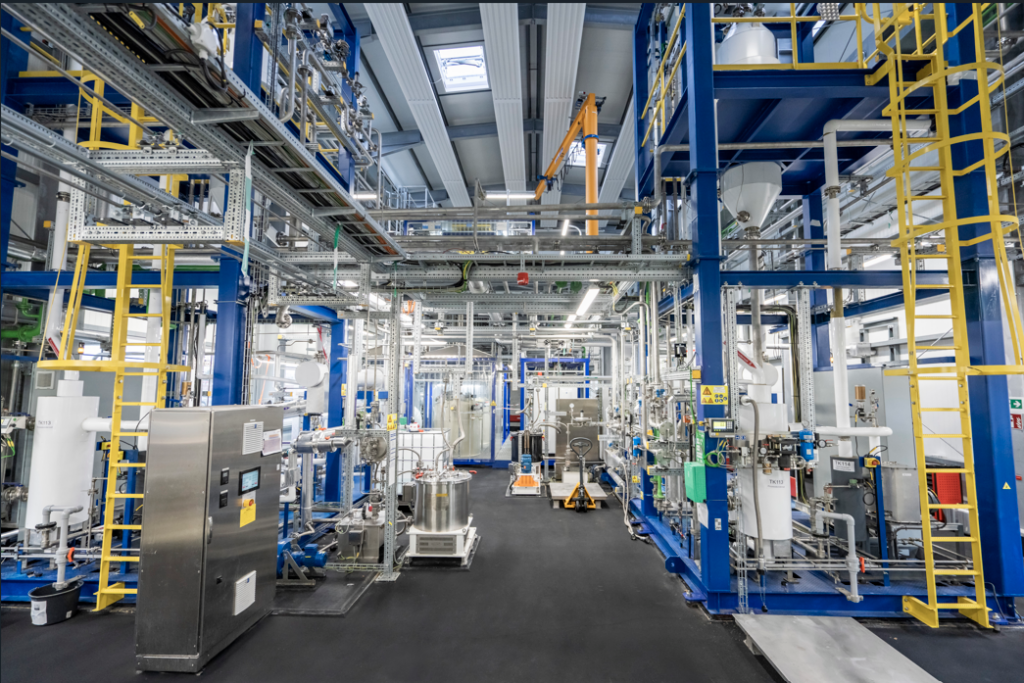
Vulcan has built plants to demonstrate both lithium extraction and lithium chemical production. The plants serve multiple purposes:
- They provided the data for Vulcans studies that underpinned its financial investment decision to start Lionheart construction
- They provide samples for customer product qualification
- They continue to serve as optimisation plants for process optimisation and training, in preparation for the Company’s commercial operations. They are analogous to Vulcan’s Lionheart commercial plants, with similar process flowsheets.
- After several years of continuous piloting at multiple wellhead locations, Vulcan began producing lithium chloride (LiCl) from the LEOP in April 2024.
- This marks the first LiCl produced domestically in Europe from a fully local, integrated value chain.
- LEOP has consistently achieved over 90% lithium extraction efficiency—up to 95%—from its A‑DLE unit, aligning with performance expectations.
- Represents a €40+ million investment by Vulcan.
- Functions as an optimisation, operational training, and product‑qualification testing facility, enabling operational readiness for the future Lionheart commercial facility.
- Builds on more than three years and 10,000+ hours of successful in‑house A‑DLE piloting conducted in Vulcan’s labs and at its pilot plants in Insheim and Landau.
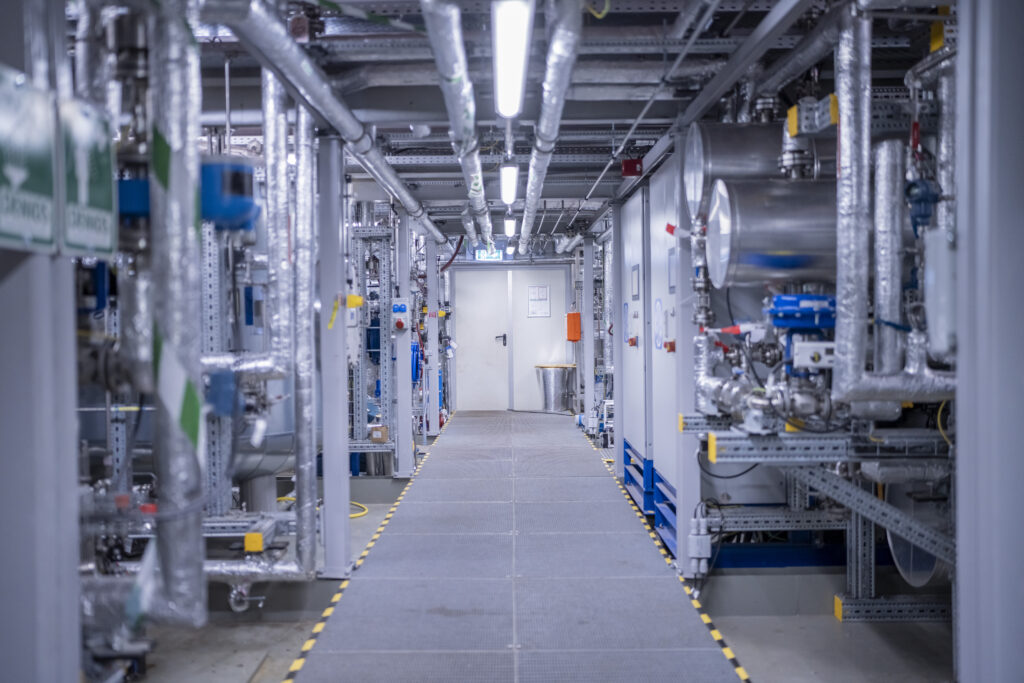
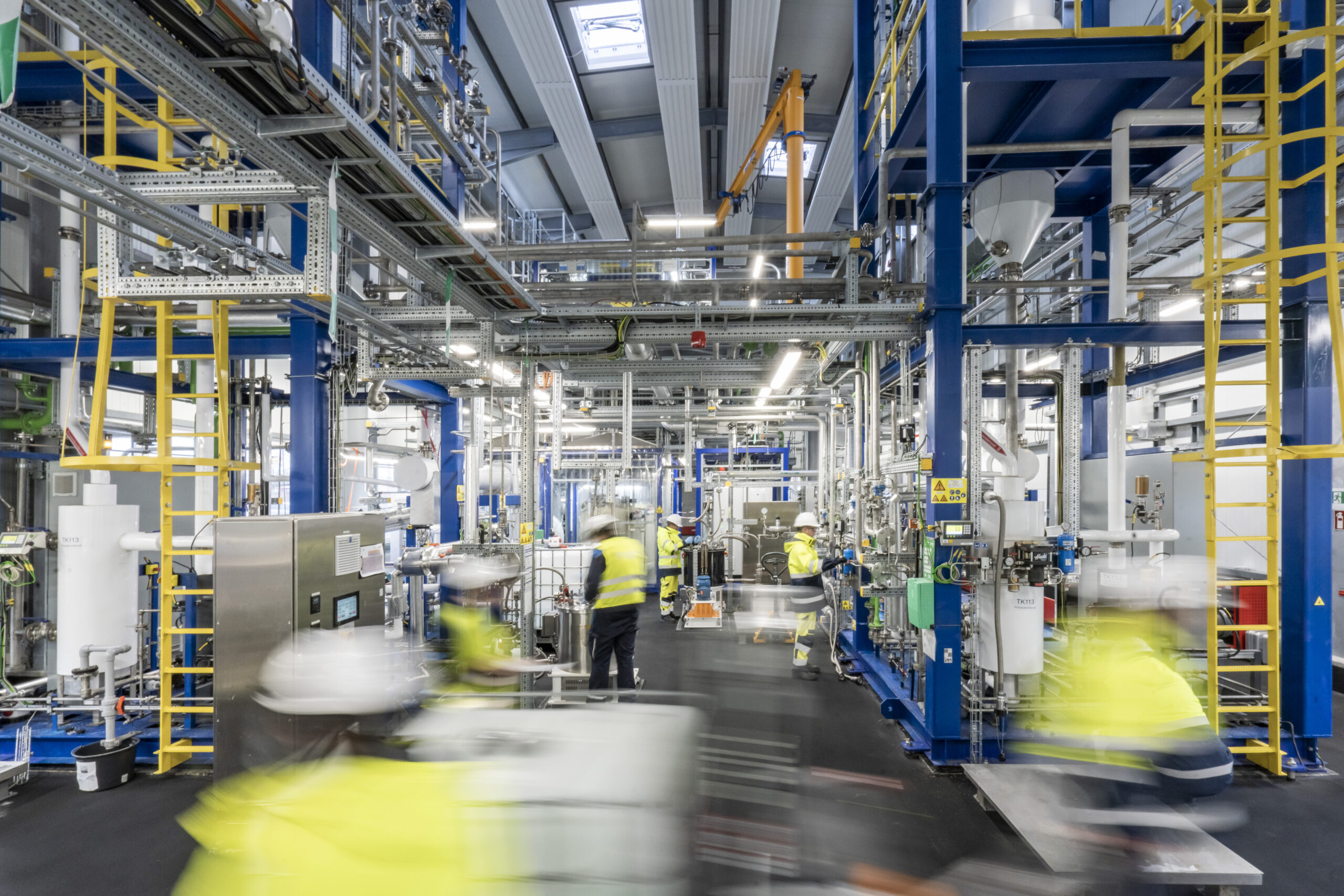
- At Vulcan’s pre‑commercial downstream optimisation facility, CLEOP, lithium chloride (LiCl) produced upstream at LEOP is converted into lithium hydroxide monohydrate (LHM) for the European battery supply chain.
- This downstream conversion represents a major step forward for Europe’s battery supply chain resilience and strategic independence.
- In January 2025, Vulcan produced the first battery‑quality LHM at CLEOP — the first fully integrated, battery‑quality LHM produced in Europe, from raw material to finished product.
- Battery‑quality LHM from CLEOP is being used in ongoing qualification processes with Vulcan’s European‑focused offtakers, including:
- Stellantis
- LG
- Umicore
- Glencore
- While the Lionheart commercial facility is under construction, CLEOP enables product validation, customer readiness, and continuous improvement of downstream processing.
Research and development
Research and development is well embedded in Vulcan’s DNA. The research team for our integrated lithium and renewable energy project consists of ~30 experts who not only possess scientific expertise but also have extensive knowledge in the fields of analytics, data science, and chemical engineering.
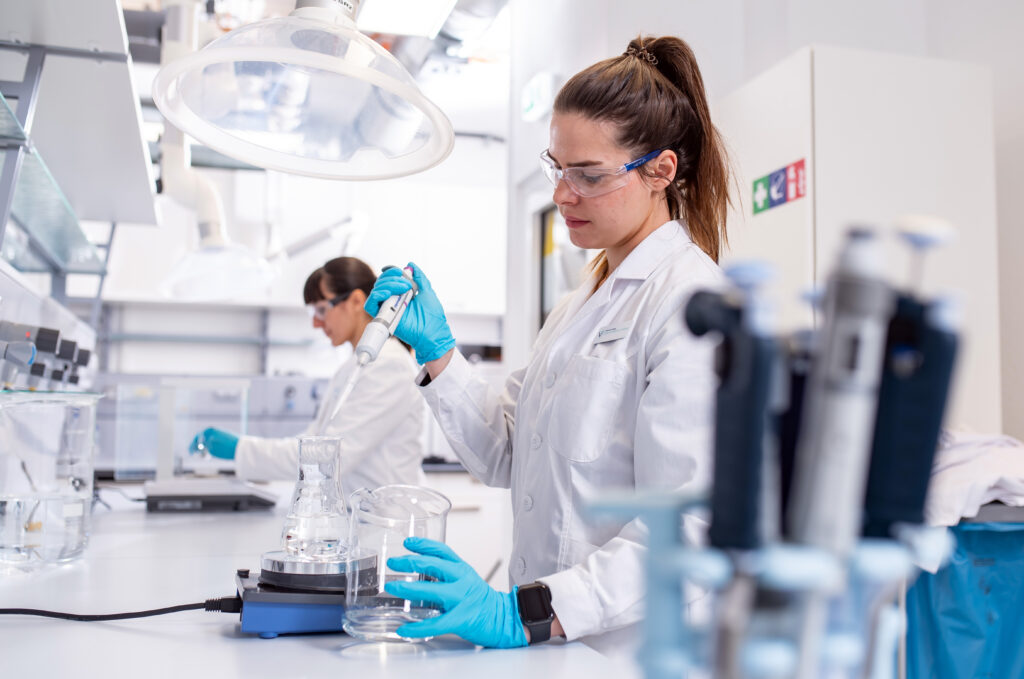
The team’s main job is to conduct experiments in the lab on the steps involved in our integrated lithium and renewable energy process. The primary objective is to gain extensive knowledge of each step, enabling quick optimisation of the existing processes, and the resolution of potential issues before they arise, utilising big data methods for the analysis of measurement data and the identification of trends and patterns.
Process development
- A-DLE optimisation through fully automated engineered systems
- VULSORB® synthesis
- Development of new sorbents
- Generation of intellectual property.
Analytics
Conducting wet chemical and solids analysis using modern analytical methods:
- Inductively coupled plasma atomic emission spectroscopy
- Ion chromatography
- Titration
- Photometry
- Particle size analysis
- X-ray diffraction.
Data analysis and data processing
- Development of databases for the structured collection of all experimental data and automation of data pipelines
- Analysis and visualisation of experimental data for identifying trends and patterns
- Development of predictive models using machine learning.
Central Lithium Plant
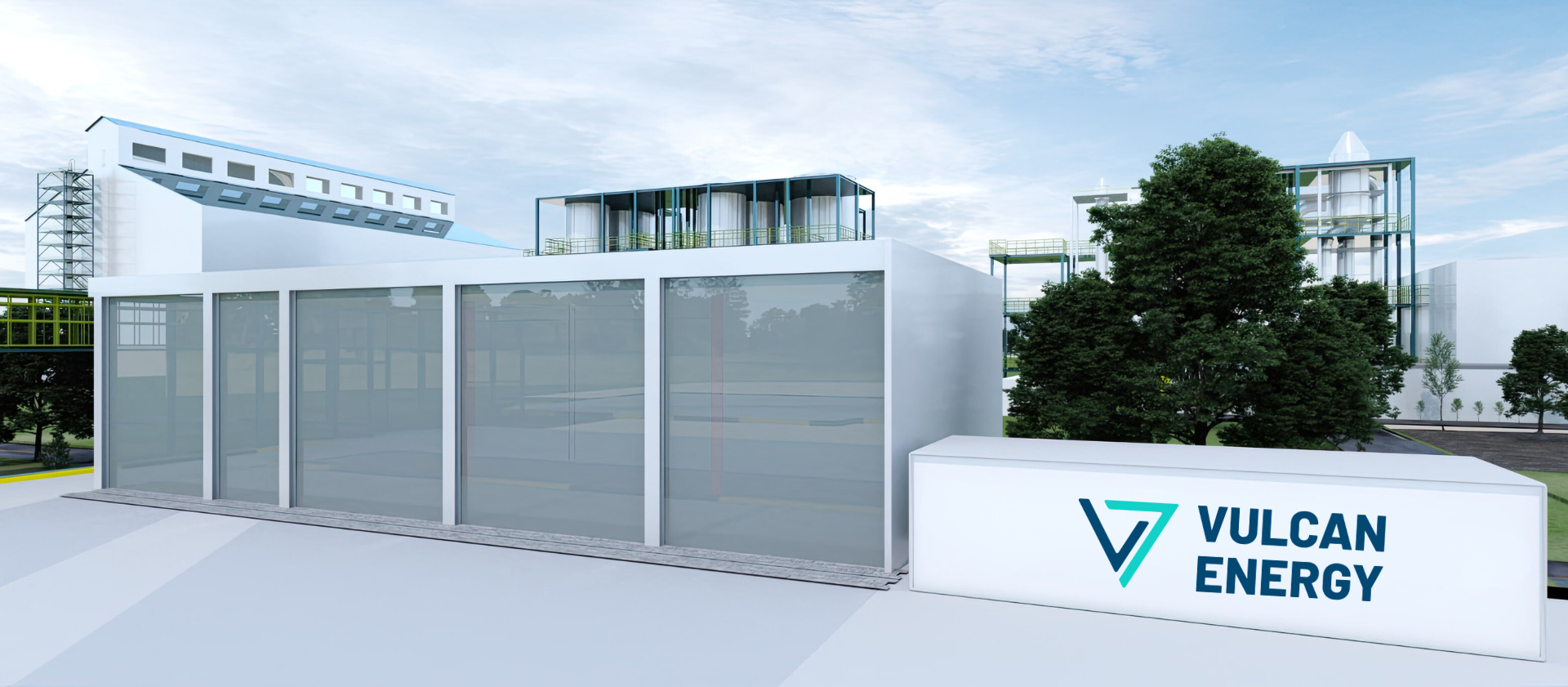
The CLP will be the Company’s commercial downstream lithium processing facility at Infraserv Park Höchst in Frankfurt, one of Germany’s largest major chemical and energy precincts. The CLP will convert LiCl from geothermal brine into battery-quality LHM, supporting Europe’s push for locally sourced, low carbon battery materials.
- From the LEP, Vulcan’s LiCl (which is saleable in its own right) can be converted into either lithium hydroxide (LHM) or if customers prefer, lithium carbonate (Lionheart will initially focus on LHM).
- Conversion of LiCl to battery grade LHM will use electrolysis. One by-product (saleable) is HCl. Significant synergies will exist with existing chlor-alkali producers located nearby to a central lithium processing plant.
- Recycle of purge streams back to LEP – low waste