Successful lithium production Vulcan’s Optimisation Plants.
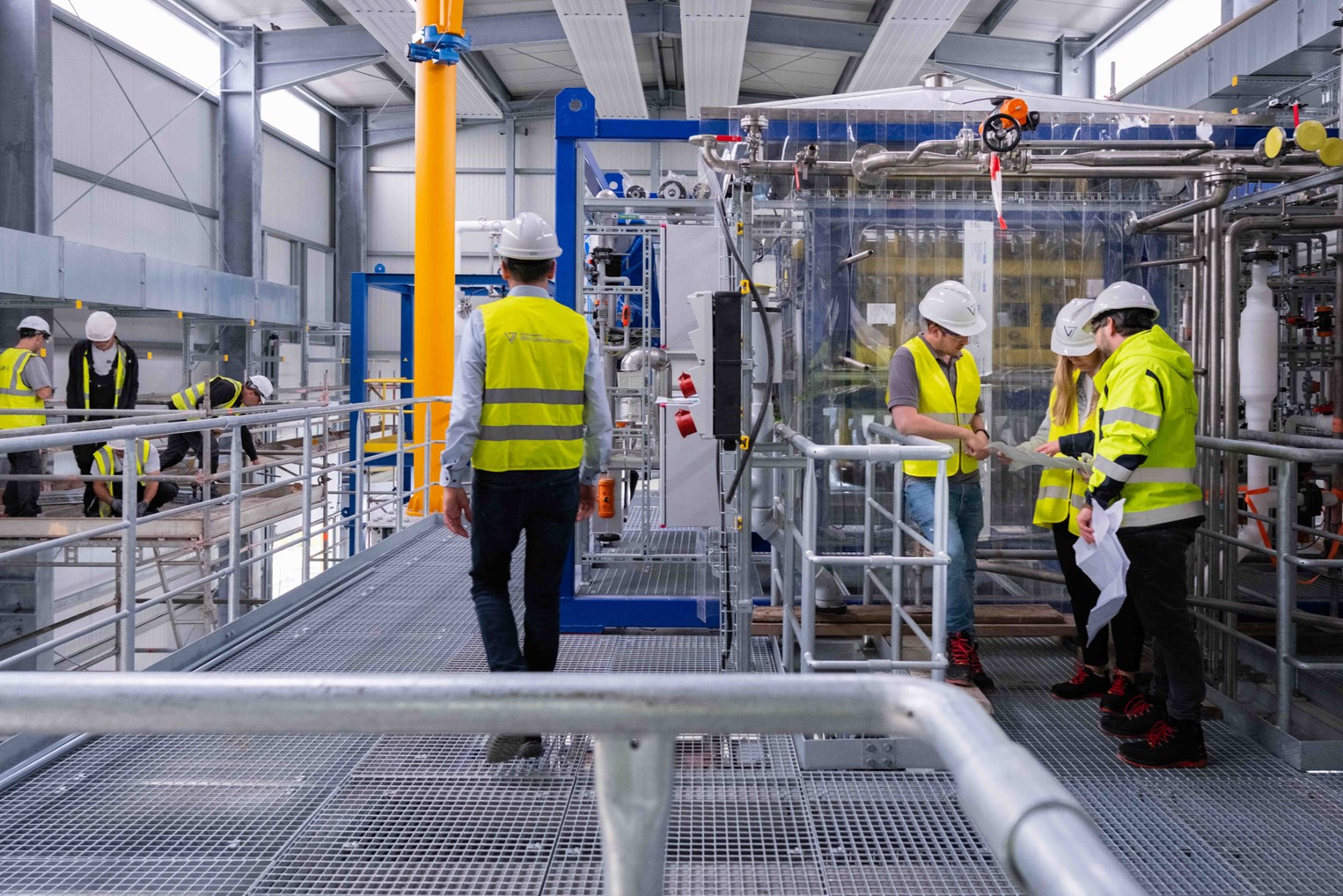
Vulcan has built plants to demonstrate both lithium extraction and lithium chemical production. The plants serve multiple purposes:
- They provided the data for Vulcans studies that underpinned its financial investment decision to start Lionheart construction
- They provide samples for customer product qualification
- They continue to serve as optimisation plants for process optimisation and training, in preparation for the Company’s commercial operations. They are analogous to Vulcan’s Lionheart commercial plants, with similar process flowsheets.
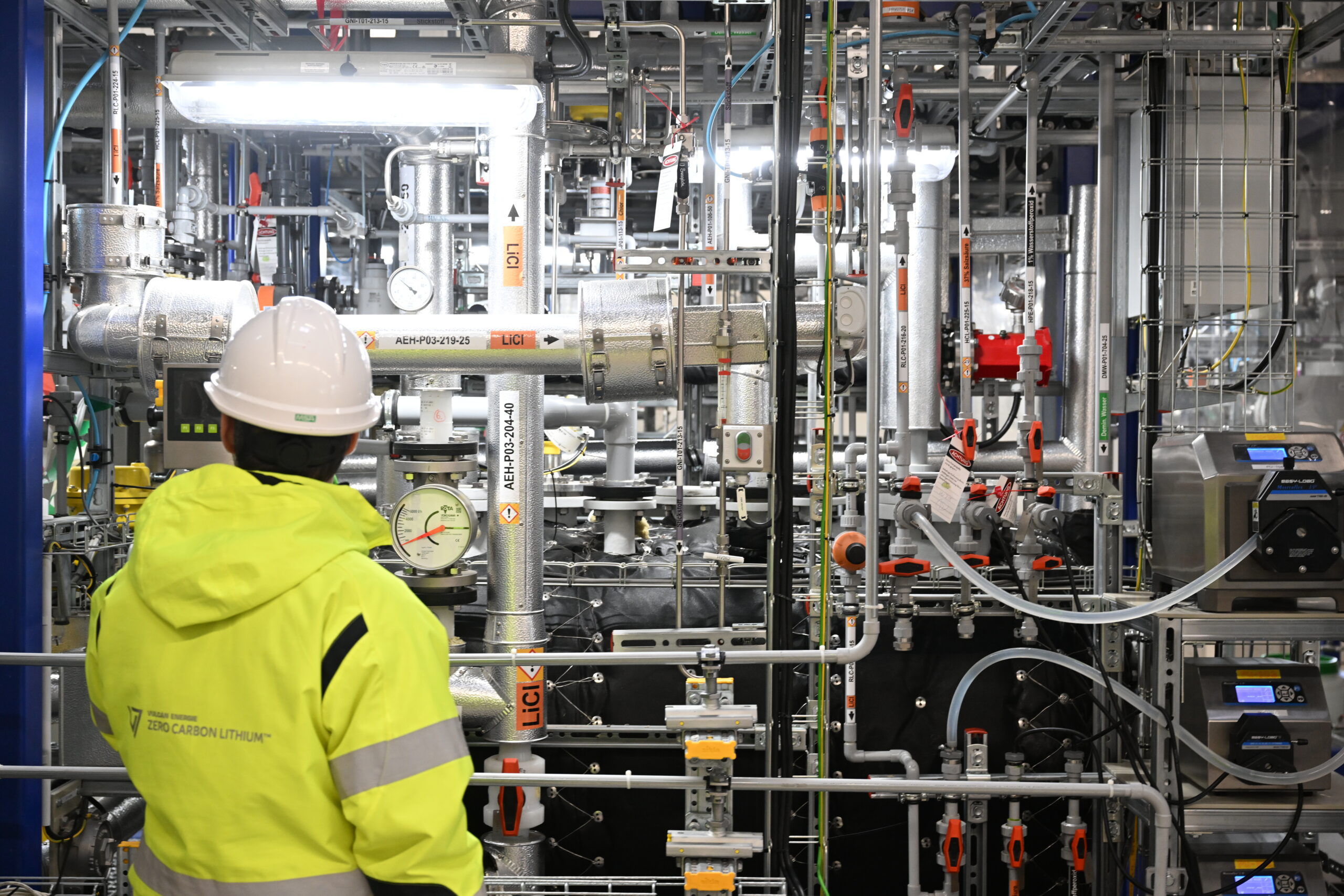
Lithium Extraction Optimisation Plant Vulcan LEOP.
Following years of continuous piloting at multiple well head locations, Vulcan started production of lithium chloride (LiCl) from the Lithium Extraction Optimisation Plant (LEOP) in April 2024. This represented the first LiCl domestically produced from a local source with an entirely locally sourced value chain in Europe, for Europe.
Results to date have consistently recorded over 90% (up to 95%) lithium extraction efficiency from its A-DLE unit, which is in line with expectations.
Representing a more than €40m investment by Vulcan, LEOP is an optimisation, operational training and product qualification testing facility designed to enable operational readiness for when the Lionheart commercial facility is completed.
LEOP builds on over three years and more than 10,000 hours of successful in-house A-DLE piloting both in the Vulcan labs and at its pilot plants in Insheim and Landau.
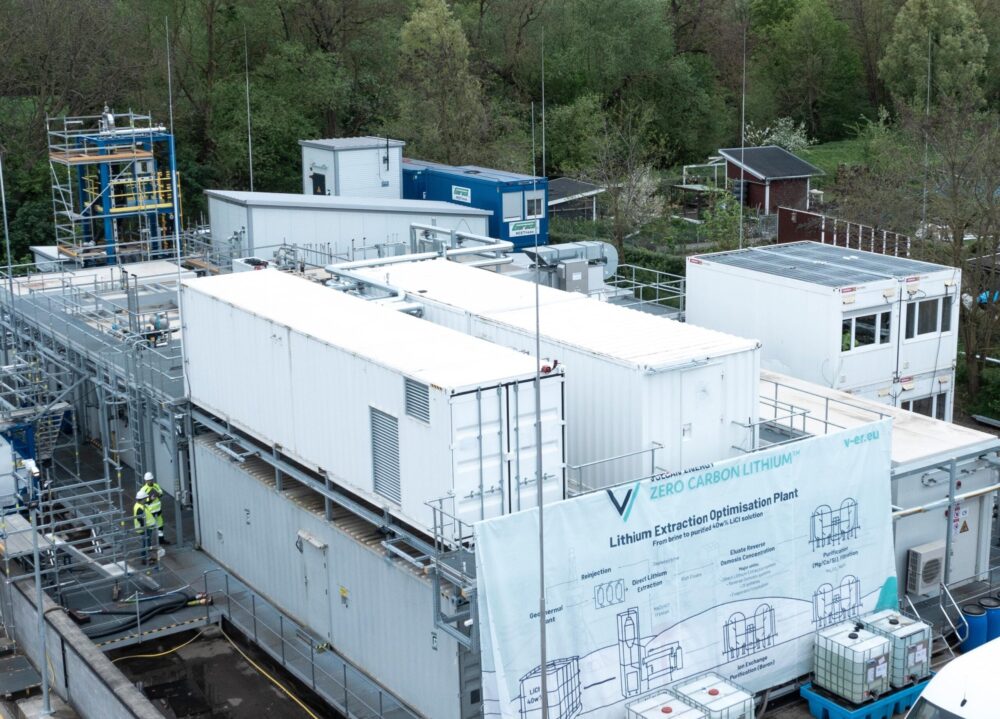
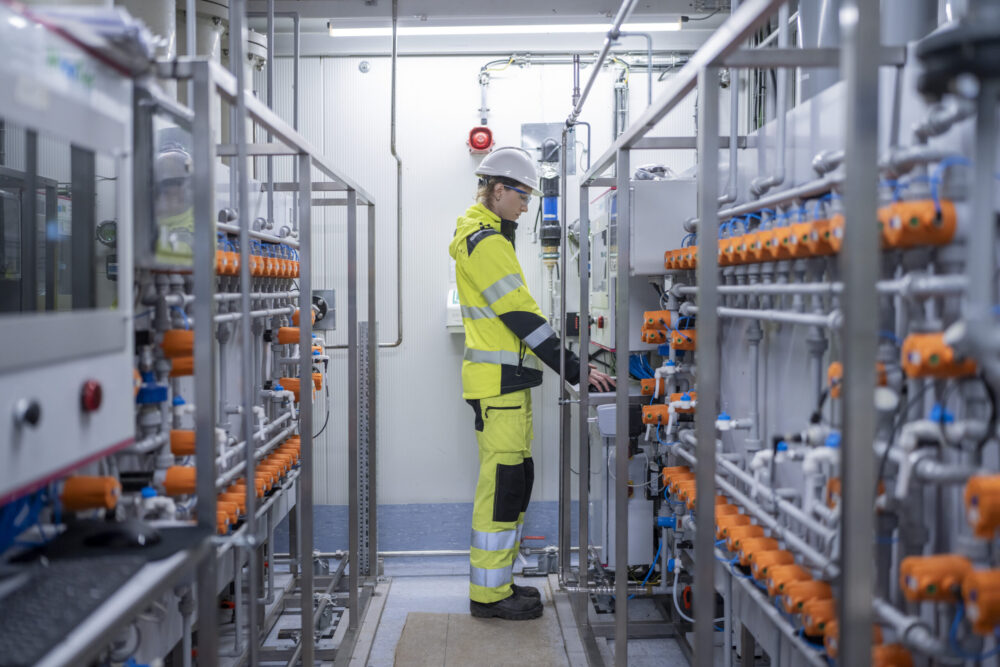
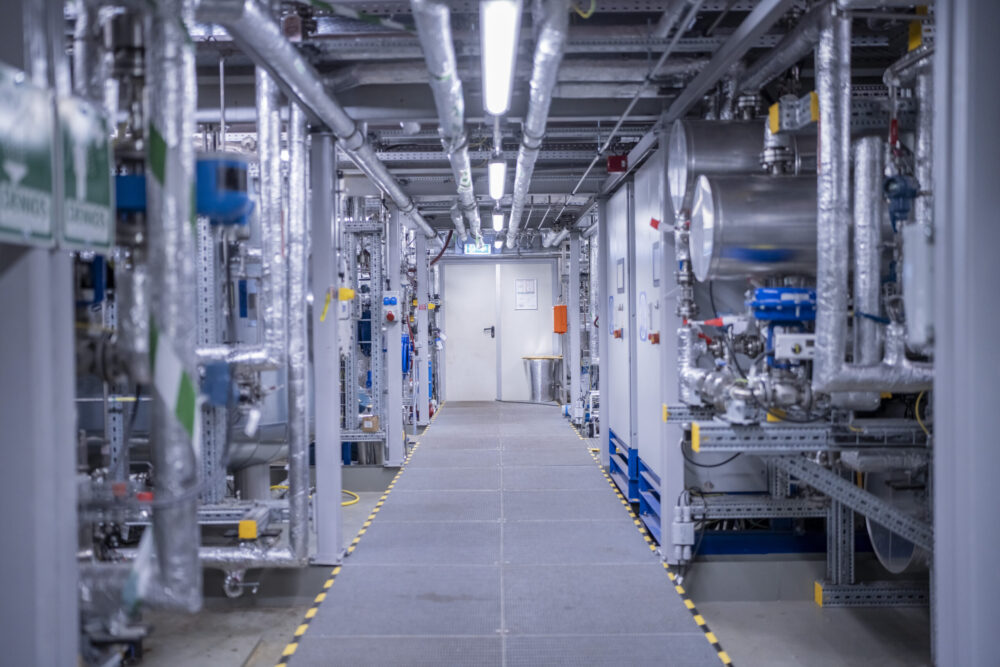
The LiCl produced by LEOP represents the first lithium chemicals fully produced from a locally sourced raw material, i.e. extracted and then processed locally, at this plant scale in Europe. During hot commissioning and startup of LEOP, a generic aluminate-based lithium adsorbent was used, that has been used before in Vulcan’s lab and pilot plants. Vulcan’s high-performance aluminate-based lithium adsorbent VULSORB® is used for the long-term operation. The LiCl product (40% weight solution) produced from LEOP is transported to the Höchst Industrial Park in Frankfurt-Höchst, where Vulcan’s downstream optimisation plant CLEOP is located. At CLEOP, LiCl is converted into battery-grade lithium hydroxide monohydrate (LHM).
In January 2025, Vulcan has produced the first battery-quality LHM at its CLEOP, representing the first fully integrated, battery-quality LHM produced in Europe, from raw material to final product.
The commercial project is aiming for 24,000 tonnes per annum of lithium hydroxide production capacity, the financing process of which is currently being led by BNP Paribas.
Central Lithium Electrolysis Optimisation Plant Vulcan CLEOP.
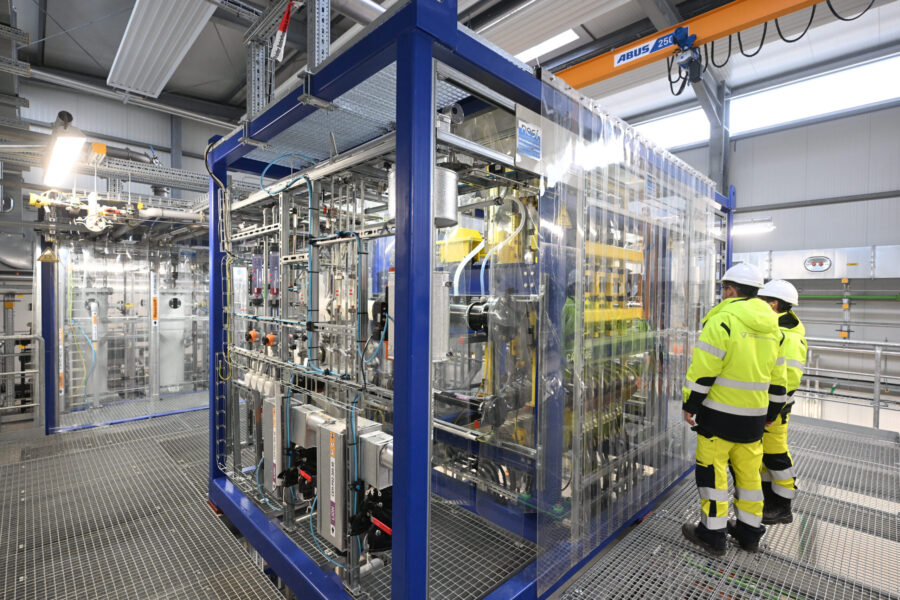
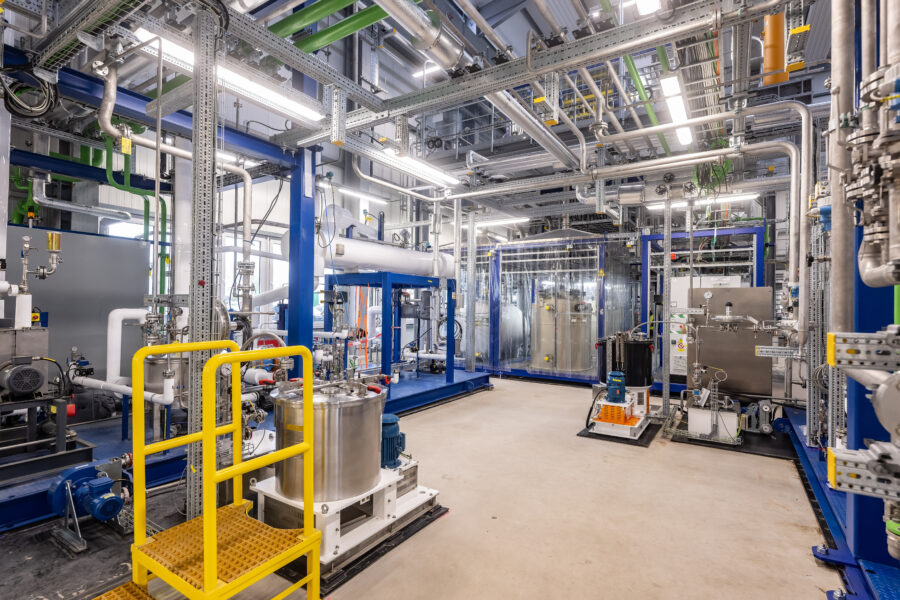
At Vulcan’s pre-commercial downstream optimisation facility, CLEOP, lithium chloride solution from the upstream plant (LEOP) is converted into lithium hydroxide (LHM) for the battery supply chain. This represents a big step for Europe’s battery supply chain resilience.
In January 2025, Vulcan produced the first battery-quality LHM at its CLEOP, representing the first fully integrated, battery-quality LHM produced in Europe, from raw material to final product. Battery-quality LHM from CLEOP will be used in ongoing qualification processes with Vulcan’s European focused offtakers, including Stellantis, LG and Umicore, whilst Lionheart is being constructed.
Research and project delivery go hand in hand Research and development.
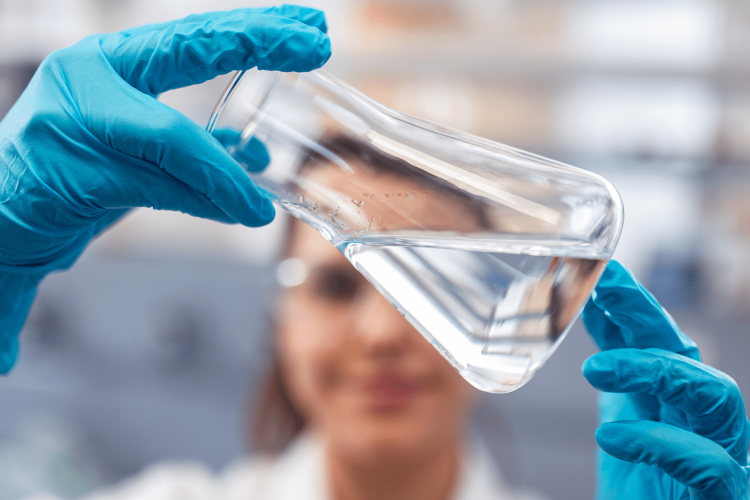
Research and development is well embedded in Vulcan’s DNA. The research team for our integrated lithium and renwable energy project consists of ~30 experts. In addition to scientists, Vulcan’s research laboratory also includes analysis specialists, data scientists and technicians.
The team’s main job is to conduct experiments in the laboratory on the individual steps involved in our integrated lithium and renwable energy project process. The primary objectives are to obtain well-founded, extensive knowledge of each step, quickly optimise processes and resolve any possible errors before they occur.


Our focus Steady improvement.
DLE optimisation
Developing new sorbents and VULSORB® synthesis
Conducting wet chemical and solids analyses using modern analytical methods:
- Inductively coupled plasma atomic emission spectroscopy (ICP-OES)
- Ion chromatography (IC)
- Titrator
- Photometer
- Particle size analyser
- X-ray diffraction (XRD)
Data analysis and data engineering
- Developing internal databases to enable the automated and structured collection of all measurement data
- Big data methods for the analysis of measurement data and recognition of trends and patterns
- Forecasting models and machine learning algorithms